Bourbon Library
Collection and tasting log for bourbon.
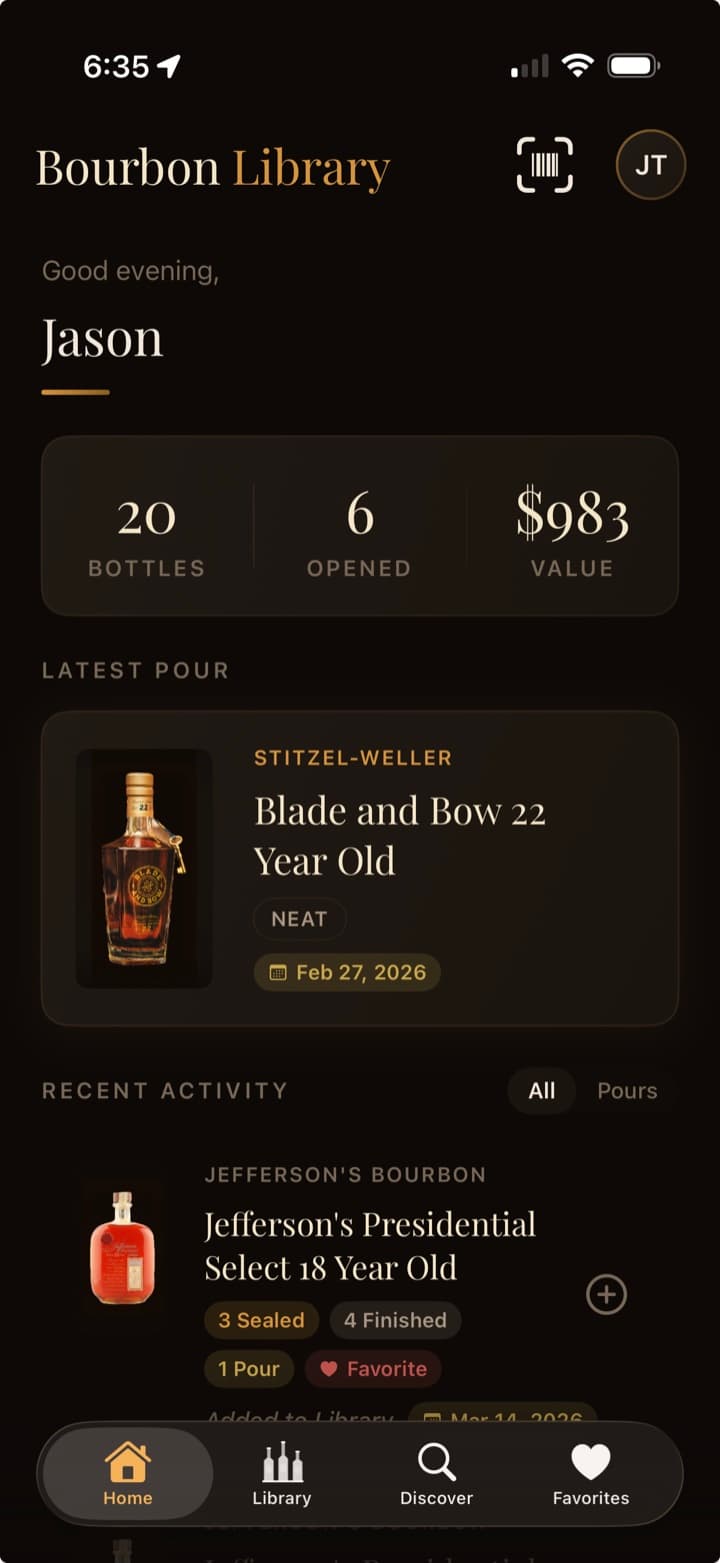
Bourbon Library keeps track of what is on your shelf, what you have finished, what you tasted somewhere else, and what you are still hunting for. Those are four different states, and most collection apps flatten them into one.
Inventory is counted per bottle rather than per label, so four bottles of Blanton's with one open and three sealed reads as exactly that. Pours are logged against a bottle as you drink it, and tasting notes are structured into nose, palate, and finish alongside a rating.
It is a native Swift app that keeps the collection on the device through SwiftData and syncs it across the ones you own. Sign in goes through Apple or Google, so there are no passwords to hold or reset. Bottles are added by scanning a barcode, searching the catalog, or entering one by hand.
The venture behind it
Built inside Application Studio.
Dashboard
The shelf at a glance: how many bottles, how many are open, and what the collection is worth. Below that sits the last pour you logged and a running feed of everything that has happened, which filters down to just the pours.
Library
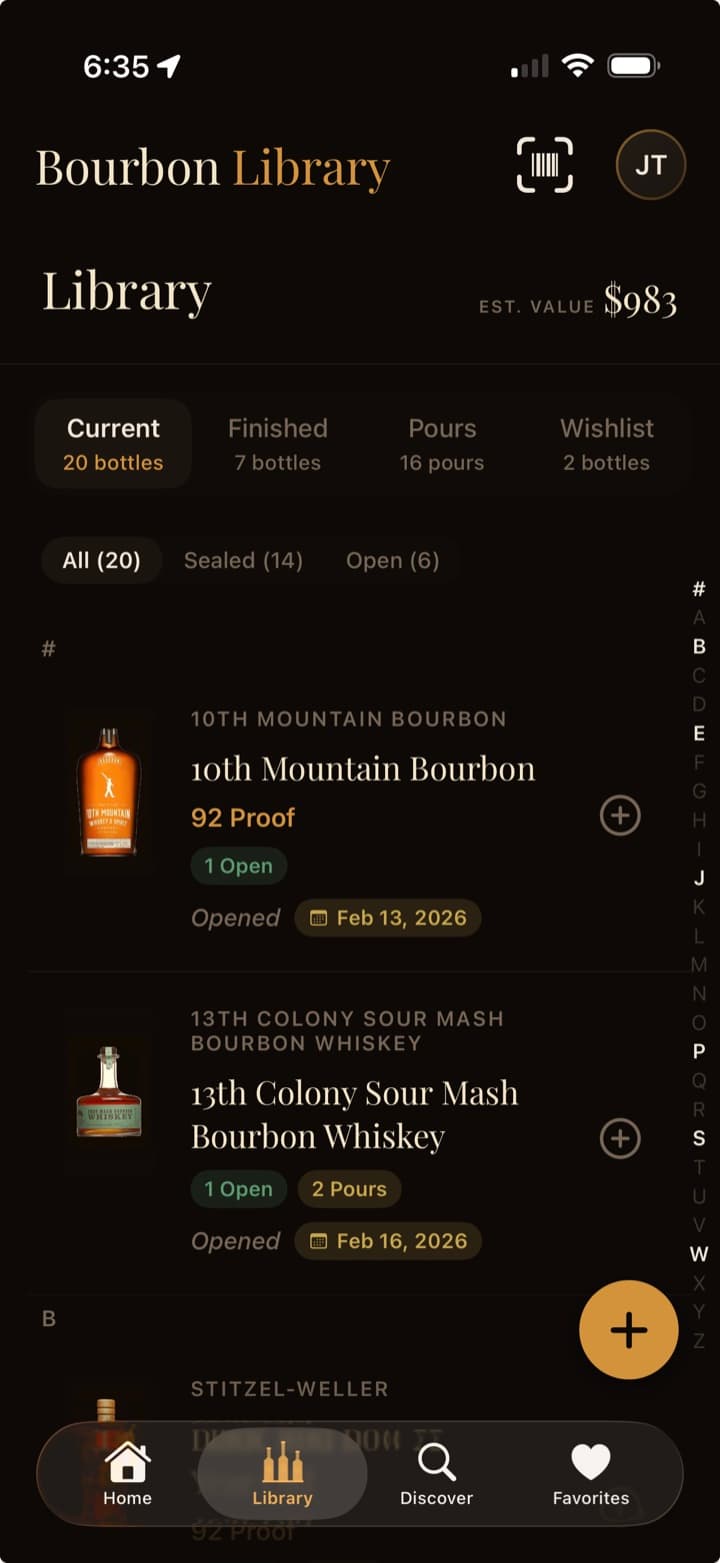
Current, finished, pours, and wishlist as four tabs, because a bottle you drank last year and a bottle you hope to buy are not the same thing. Inside current you can narrow to sealed or open, and an alphabet index runs down the edge once a collection outgrows scrolling.
Bottle detail
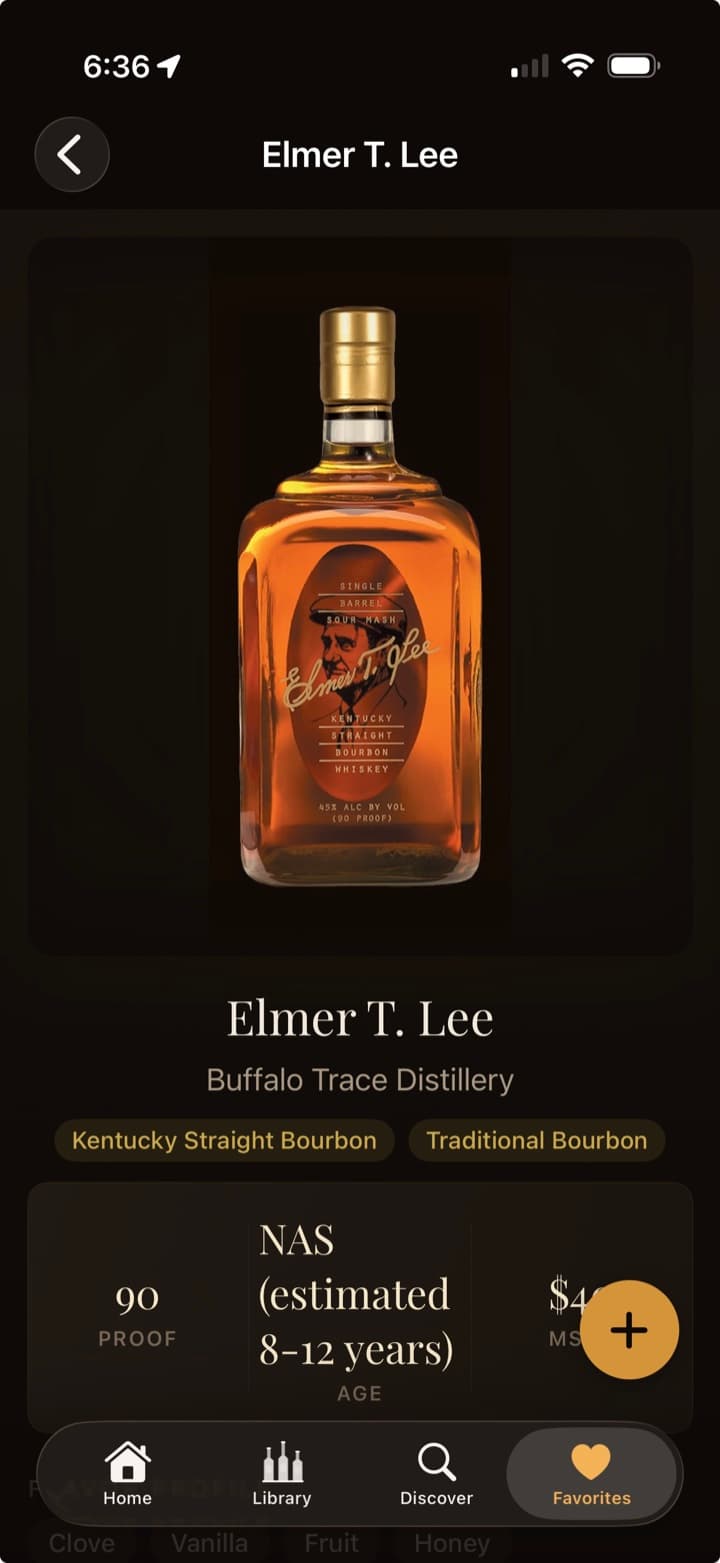
Everything known about the expression: distillery, proof, age, suggested price, and the flavor notes underneath. The photograph leads, because at this end of the shelf people recognize a bottle well before they read its label.
Quick actions
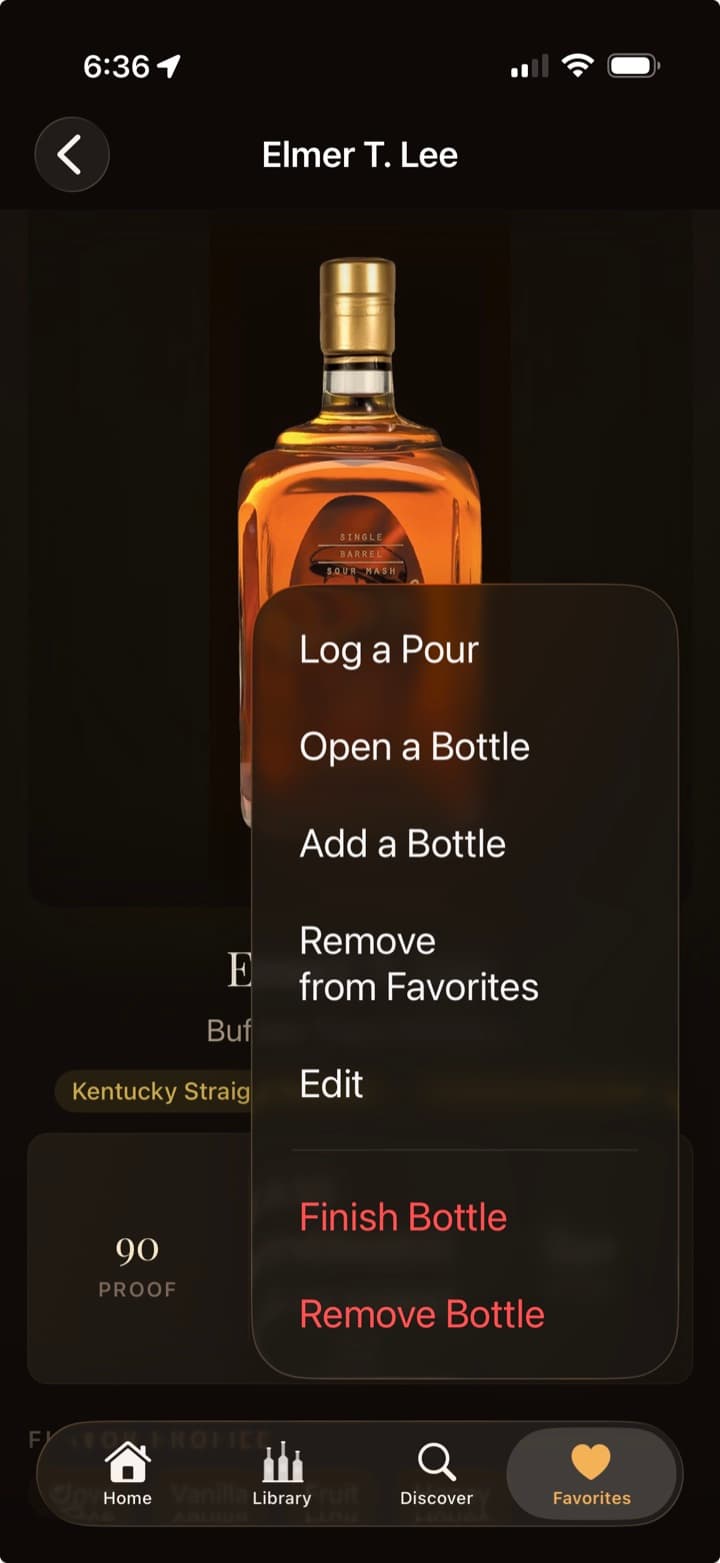
The things you actually do are one press away: log a pour, open a sealed bottle, add another of the same, or finish one off. Because inventory is counted per bottle, opening one of four leaves the other three sealed.
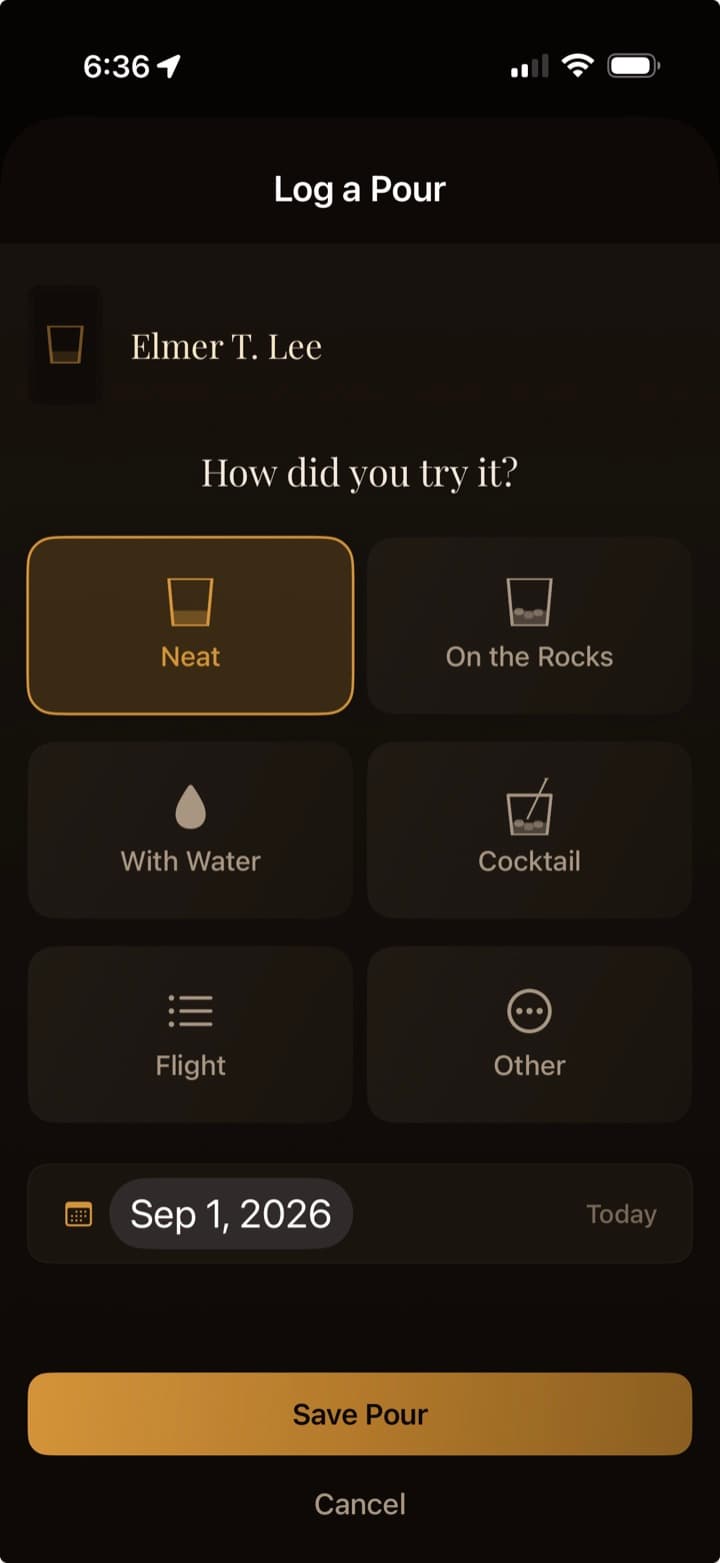
Log a pour
Two taps: how you drank it and when. Neat, on the rocks, with water, in a cocktail, or as part of a flight, dated today unless you say otherwise. That history is what turns an inventory into a record of what you actually drank.